
Navigating the Shift – Understanding the Fed, Mortgage Rates, and the Colorado Springs Housing Market
As the crisp autumn air settles across Colorado Springs and the weather cools down, the real estate market is heating up with headlines. If you’ve been keeping an eye on the news, you already know that mortgage rates have spiked, climbing well over the 7% mark. Much of the conversation centers around the Federal Reserve, the federal funds rate, and what these economic shifts mean for your future real estate plans right here in El Paso County.
As your local Colorado Springs real estate expert, Marquesa Hobbs believes in cutting through the economic noise. Let’s take a close look at what the Federal Reserve is trying to achieve, why mortgage rates are behaving the way they are, and how you can successfully navigate this market whether you are planning to buy or sell.
The Federal Reserve and Its Dual Mandate
To understand today’s mortgage rate environment, we first need to look at what the Fed is doing and why. The Federal Reserve operates under a very simple dual mandate:
- Keep inflation down or bring it down as close to their 2-percent target as possible.
- Maintain maximum employment across the economy.
While the job market has remained remarkably robust and employment numbers look strong, inflation has proven to be a persistent challenge. To combat high inflation—which has been exacerbated this year by global events, energy price pressures, and international conflicts like the situation in Iran—the Fed has utilized its primary tool: raising the federal funds rate.
When inflation remains high, it creates a "double whammy" for the housing market. First, it forces investors to demand higher yields on Treasury bonds, which keeps upward pressure on mortgage rates. Second, high inflation severely erodes consumer purchasing power, making everyday goods more expensive and making homeownership feel further out of reach.
Short-Term Pain for Long-Term Gain
We are currently navigating a period of short-term pain in exchange for long-term gain.
When the Fed hikes the federal funds rate, it intentionally slows down economic activity to cool inflation. Unfortunately, in the near term, this action puts additional upward pressure on borrowing costs, keeping mortgage rates elevated.
However, looking ahead to the long-term goal, the Fed’s aggressive stance is designed to stabilize the economy. Once inflation successfully trends back down toward that 2% target, the pressure on the bond market will ease. Over time, firmer Fed action will help steady the bond market and open the door to lower mortgage rates, improved buyer affordability, and a more balanced housing market for everyone involved.
The Common Misconception: Does the Fed Set Mortgage Rates?
One of the most frequent questions Marquesa Hobbs hears from clients in Colorado Springs is: "Did the Fed raise mortgage rates?"
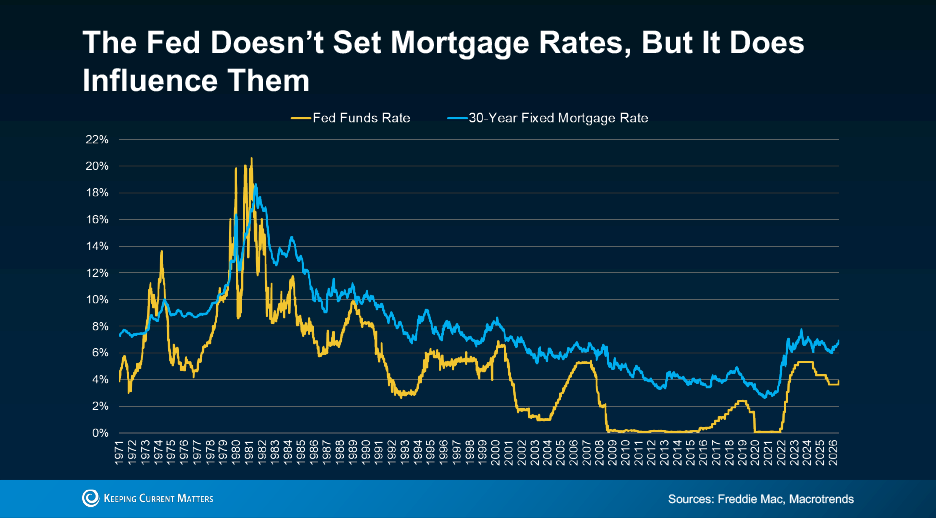
The short answer is no. The Federal Reserve does not directly set mortgage rates. While Fed policy is a contributing factor, mortgage rates are influenced by multiple economic elements, including the inflation rate, the pace of job creation, and overall economic growth.
To visualize this, if you look at a historical chart tracking the 30-year fixed mortgage rate against the federal funds rate over the last several decades, you will see general correlations, but they do not always move in lockstep.
Instead, 30-year fixed mortgage rates track much more closely with the 10-year Treasury yield. According to financial experts, most 30-year mortgages last around 10 years on average before the homeowner refinances or sells the property. Consequently, mortgage rates follow the 10-year Treasury yield much more directly than the short-term federal funds rate. Recently, as the 10-year Treasury yield climbed to its highest point in nearly 20 years, it pulled mortgage rates up right along with it—pushing them well past 7%.
What This Means for Colorado Springs Buyers and Sellers
Knowing that we are in a higher-rate environment for the near term, how should buyers and sellers in the Pikes Peak region adapt their strategies?
- For Current Homeowners: Many local homeowners are sitting on record amounts of equity—often exceeding $300,000 on average. If you are looking to tap into that equity for home improvements or debt consolidation, keep in mind that products like Home Equity Lines of Credit (HELOCs) are variable-rate loans tied directly to the federal funds rate. As the Fed raises rates, borrowing against your equity becomes more expensive. However, your massive equity stash remains a powerful tool if you decide to buy your next home.
- For Small-Scale Builders: Local mom-and-pop and independent builders face higher costs of capital right now. Construction loans carry higher interest rates, which can drive up final home prices. This makes new construction pricing a vital area to watch.
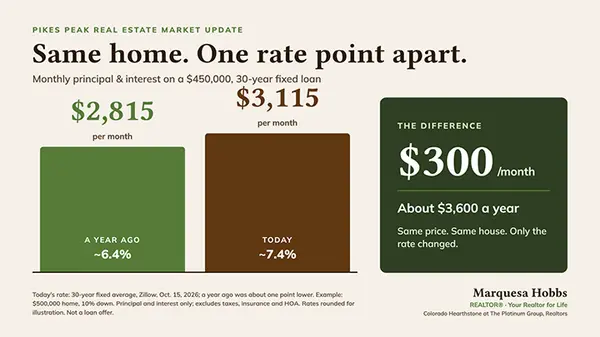
- For Buyers: Elevated mortgage rates and lingering inflation reduce overall buying power, resulting in higher monthly payments. However, as buyer demand moderates, competition slows down, giving patient buyers an opening to negotiate.
- For Sellers: If you are sitting on a historically low mortgage rate of 2%, 3%, or 4%, moving can feel daunting. Many homeowners choose to stay put rather than take on a higher rate for their next property. However, life changes—such as growing families, job relocations, or downsizing—happen regardless of interest rates. Sellers who price their homes fairly for today's market are still finding success.
Looking Ahead: What Do the Experts Predict?
According to market watchers and tools like the CME FedWatch tool, market expectations suggest the Fed may implement additional rate adjustments before the year concludes to firmly anchor inflation. Prominent housing analysts note that until global energy and supply pressures fully resolve, we can expect mortgage rates to hover in the mid-to-upper 6% or 7% range.
As Sam Williamson from First American notes, firmer Fed action over time will help steady the bond market and pave the way for lower mortgage rates—provided investors gain confidence that inflation is truly under control. Until then, slower home price appreciation and strategic maneuvering will help restore purchasing power for local buyers.
Connect with Marquesa Hobbs Today
Navigating today’s shifting interest rate environment requires a clear head, accurate data, and a customized strategy tailored to your unique financial goals. You don't have to figure it out alone.
Whether you are looking to buy your dream home in Colorado Springs, cash in on your home equity, or list your property for top dollar, Marquesa Hobbs is here to guide you every step of the way. Reach out today to schedule your personalized market consultation and take control of your real estate future!
Top Realtor, Marquesa Hobbs, is ready to help you whether you are buying or selling Real Estate!


cell 719.238.0330 office 719.536.4444
Categories
Recent Posts





GET MORE INFORMATION
